
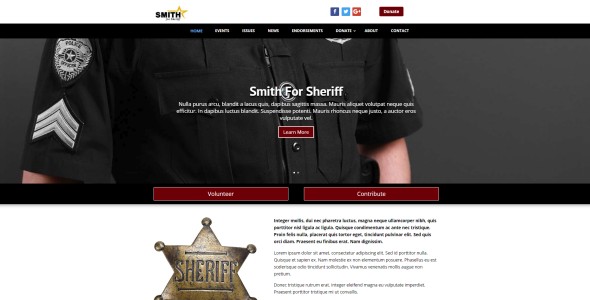
A sheriff campaign website gives voters a place to learn about your experience, qualifications, priorities, and reasons for seeking office. It also becomes the destination you promote through campaign signs, mailings, social media, email, advertising, and other voter outreach.
We’ve worked with sheriff candidates for years, and these races tend to put unusual emphasis on professional experience and leadership. Many candidates have long careers in law enforcement, corrections, public safety, the military, or county government. The challenge is presenting that background in a way voters can quickly understand.
Your website should establish your qualifications without reading like a résumé.
What Voters Need From a Sheriff Campaign Website
Most voters are not going to study every page of your website. They may arrive after seeing your name on a sign, receiving a mailing, reading about the race, or searching for the candidates online.
They should be able to quickly determine:
- Who you are and where you are running
- What experience qualifies you to serve as sheriff
- Why you are running
- Your priorities for the sheriff’s office
- What separates you from the other candidates
- Who supports your campaign
- How to donate, volunteer, request a sign, or contact you
- When the election takes place
Campaigns sometimes leave surprisingly basic information out. A candidate may have an extensive biography but never explain why they are running. Another may discuss public safety without addressing issues specific to the county. We have even seen campaign sites where the county, election date, or office sought is harder to find than it should be.
Don’t assume voters already know these things.
Present Your Experience for Voters, Not Just Your Résumé
Sheriff candidates often have extensive credentials. That can create its own content problem.
A biography containing every promotion, certification, assignment, award, and training program may demonstrate experience, but it often buries information voters actually care about.
Start with the larger story. What have you done that prepares you to lead the sheriff’s office? Where have you managed people, budgets, operations, investigations, corrections, or public-safety programs? What did you learn from that experience, and how would it affect the way you serve as sheriff?
Detailed credentials can support that story, but they shouldn’t replace it. This is particularly important in a primary or open-seat election where several candidates may have similar law-enforcement backgrounds. Experience alone may not distinguish one candidate from another. Your website gives you room to explain why your experience matters.
Explain Why You Are Running for Sheriff
One of the most important parts of the website is often one of the shortest: why you want the job.
Are you seeking to change the direction of the department? Improve recruitment and retention? Modernize operations? Address jail or corrections issues? Strengthen relationships with local police agencies? Continue programs established by the current administration?
Your answer should reflect the responsibilities of the office and concerns within your county.
Avoid generic law-enforcement language that could appear on a sheriff candidate’s website anywhere in the country. Voters are choosing a sheriff for their community. Give them specific reasons to support you.
For help developing your campaign positions, see Common Sheriff Campaign Issues and Sheriff Campaign Platforms.
Challenging an Incumbent Sheriff
Challengers face an additional problem: an incumbent may already have years of name recognition.
Voters may see the incumbent in local news, on county websites, at community events, or simply associate that person’s name with the sheriff’s office. A challenger does not have that built-in visibility.
Your website provides space to introduce yourself, establish your qualifications, and explain how your approach differs from the current administration.
If you are calling for change, explain what you would change and why. When criticism involves policies or performance, use specific information rather than vague attacks. Give voters a reason to see you as an alternative, not simply as the person running against the incumbent.
Pages to Include on a Sheriff Campaign Website
A sheriff campaign website does not need dozens of pages. A focused site with useful content is better than a larger site filled with thin or unfinished sections.
Most sheriff campaign websites should include:
- Home: Introduce the candidate, campaign message, office, county, and major priorities.
- About the Candidate: Explain your experience, qualifications, community ties, and leadership background.
- Issues or Priorities: Describe what you want to accomplish as sheriff and address issues relevant to the race.
- Endorsements: Highlight meaningful support from community leaders, organizations, law enforcement professionals, and others.
- News and Events: Keep supporters informed about campaign developments and upcoming activities.
- Volunteer: Give supporters ways to help with canvassing, events, signs, calls, and other campaign activities.
- Donate: Connect the website to the contribution service used by your campaign.
- Contact: Provide a direct way for voters, supporters, and the media to reach the campaign.
The exact structure depends on the race. If a page does not provide useful information or support a campaign goal, you probably do not need it.
Make Sure Your Campaign Controls the Website
Sheriff campaigns can change quickly. New endorsements come in. Events are announced. Issues develop. Election information changes. You may need to publish a statement or respond to local news.
Your campaign should be able to make those updates without waiting days for a developer.
Before choosing a website service or designer, find out who can edit the site, how updates are made, and whether your campaign will have direct access.
The campaign should also control its domain name and important account information. Staff, volunteers, and vendors may come and go during an election. You do not want to lose control of the website because the person who originally set it up is no longer involved.
For more on this, see Domain Names for Sheriff Candidates.
Use Your Website Throughout the Campaign
Put your website address on campaign signs, literature, business cards, advertising, email signatures, and social profiles. When you announce an endorsement, publish an issue statement, promote an event, or release campaign news, use your other channels to send interested voters back to the site.
This is particularly useful when other campaign materials do not have enough room to tell the whole story. A yard sign may contain little more than your name and office. A mailer has limited space. Social media posts disappear quickly.
Your website is where voters can get the details.
If your campaign is raising money online, you’ll want a direct path to your contribution page. This is often in the site header, sidebars and even with the body of some pages. See Sheriff Campaign Fundraising Online for more information.
Sheriff Campaign Website Examples
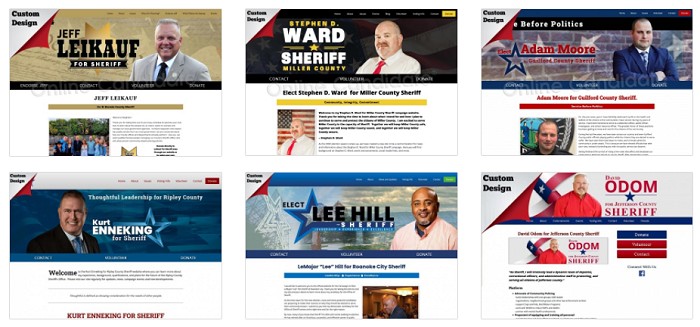
Sheriff campaign websites can take very different approaches depending on the candidate and the race. Some emphasize law-enforcement experience. Others focus on leadership, community involvement, endorsements, or the need for change. Incumbents and challengers often have very different stories to tell.
Looking at actual sheriff campaign websites can help you see how other candidates have handled photography, colors, navigation, campaign messaging, and overall presentation.
Online Candidate has created sheriff campaign websites for candidates across the country. You can browse examples from previous campaigns in our sheriff website gallery.
View Sheriff Campaign Website Examples »
Need a Website for Your Sheriff Campaign?
RunningForSheriff.info is published by Online Candidate, a political campaign website design service that has worked with local and state candidates since 2004.
Online Candidate offers professionally designed campaign websites as well as a campaign website builder for candidates who want to create their own site. The platform includes campaign-specific tools for volunteer recruitment, contact forms, events, campaign news, email signup, donations, and other common campaign needs.
Because we work specifically with political candidates, we are familiar with the deadlines, content issues, and last-minute changes that come with running for office.